Set design, Lighting, Sound
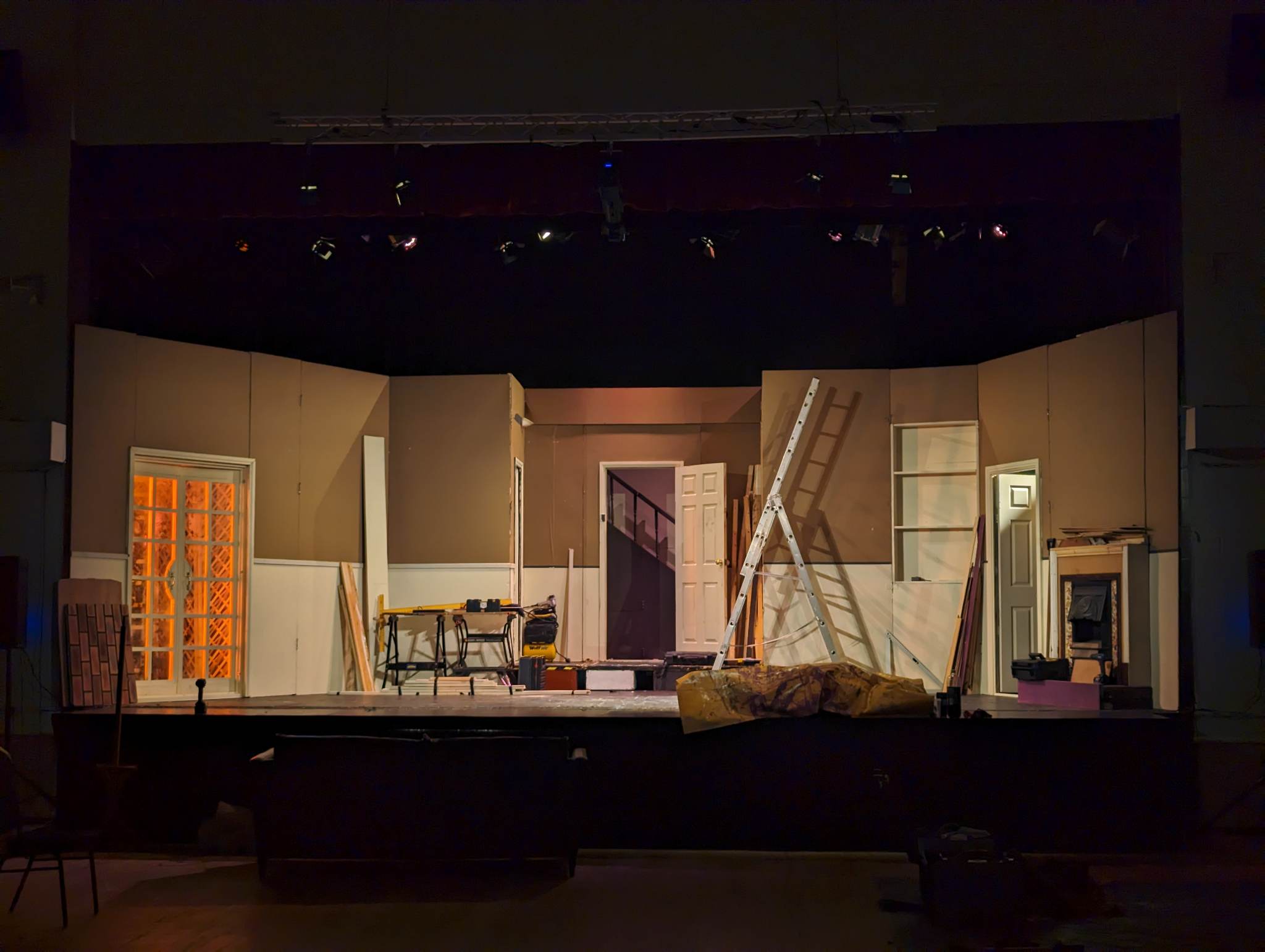
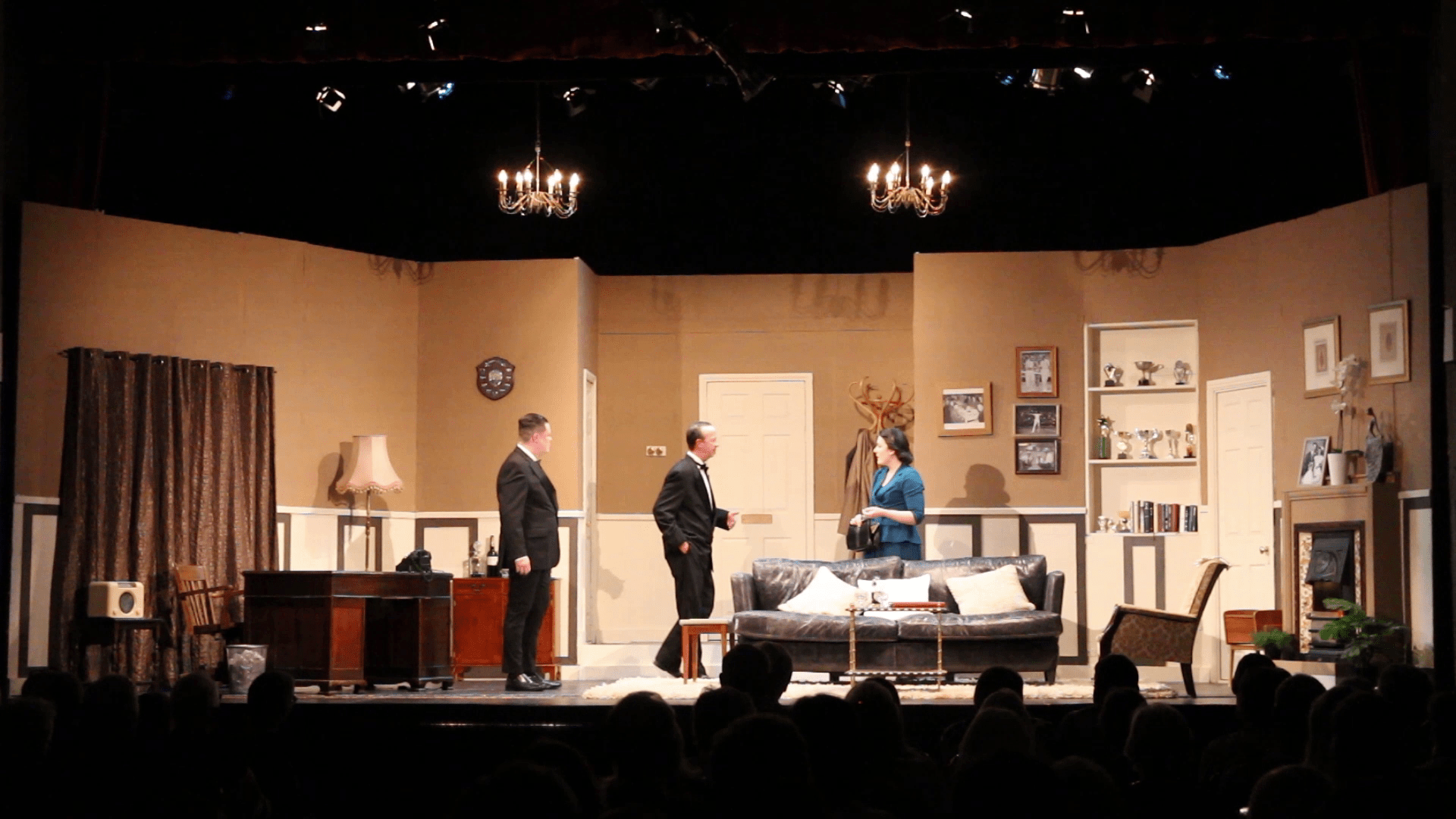
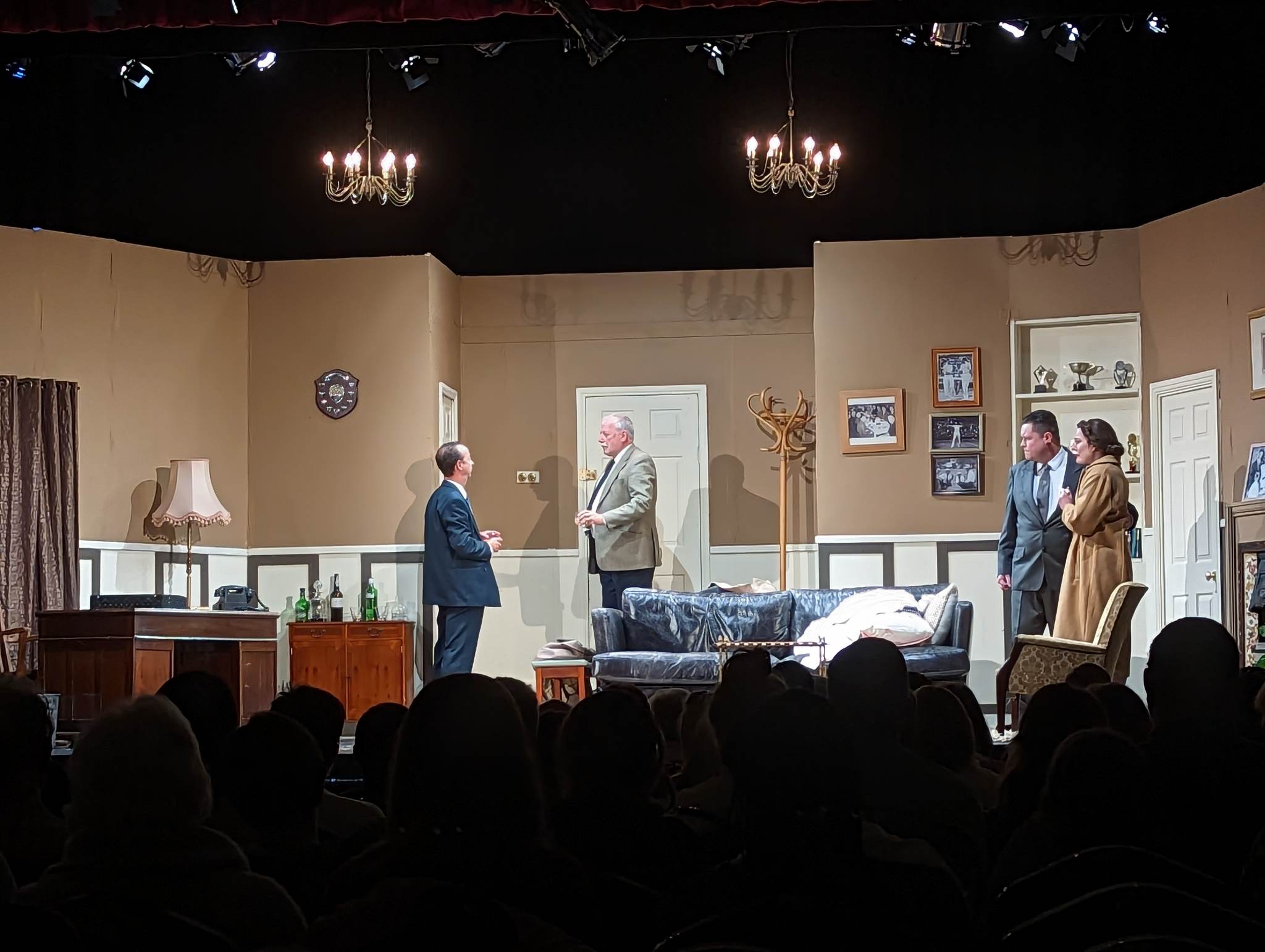
Dial M for Murder was a production I was involved with all the way, from submitting it to be considered for performance, to designing the set and lighting, to operating the show itself. The set design itself went through various modifications from the two designs I put forward, one influenced from a toured version I had LX opped at Cambridge Arts Theatre, and another closer to the description in the script. Collaborating alongside the director and the set builder, we created a final design that we feel honoured the heavily detailed plan in the script, but keeping some elements of my original designs. I am somewhat disappointed that some elements were changed without my input – such as the colour of the walls and the pannelling but otherwise I am happy with the overall outcome.
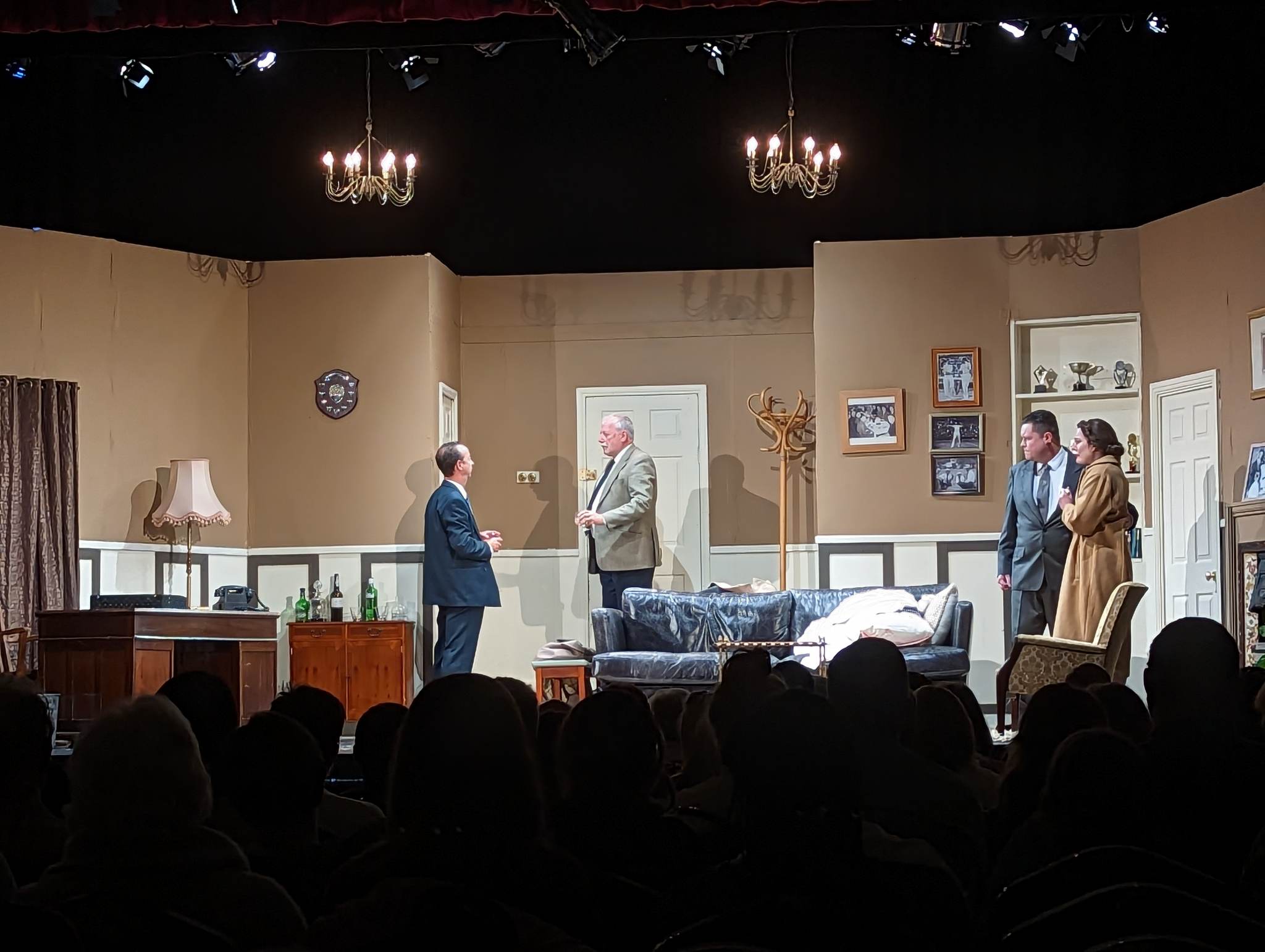
The set depicting the Wendice’s 1950s flat designed by Tim Powers and Paul Robbins was impressive. The french windows looked very substantial as did the wonderful tiled fireplace, several doors and other interesting angles added verisimilitude. Excellent set dressing and props relevant to the period added extra interest. It was so realistic I would have been quite happy to move in.
Julie Petrucci, NODA East Councillor District 4
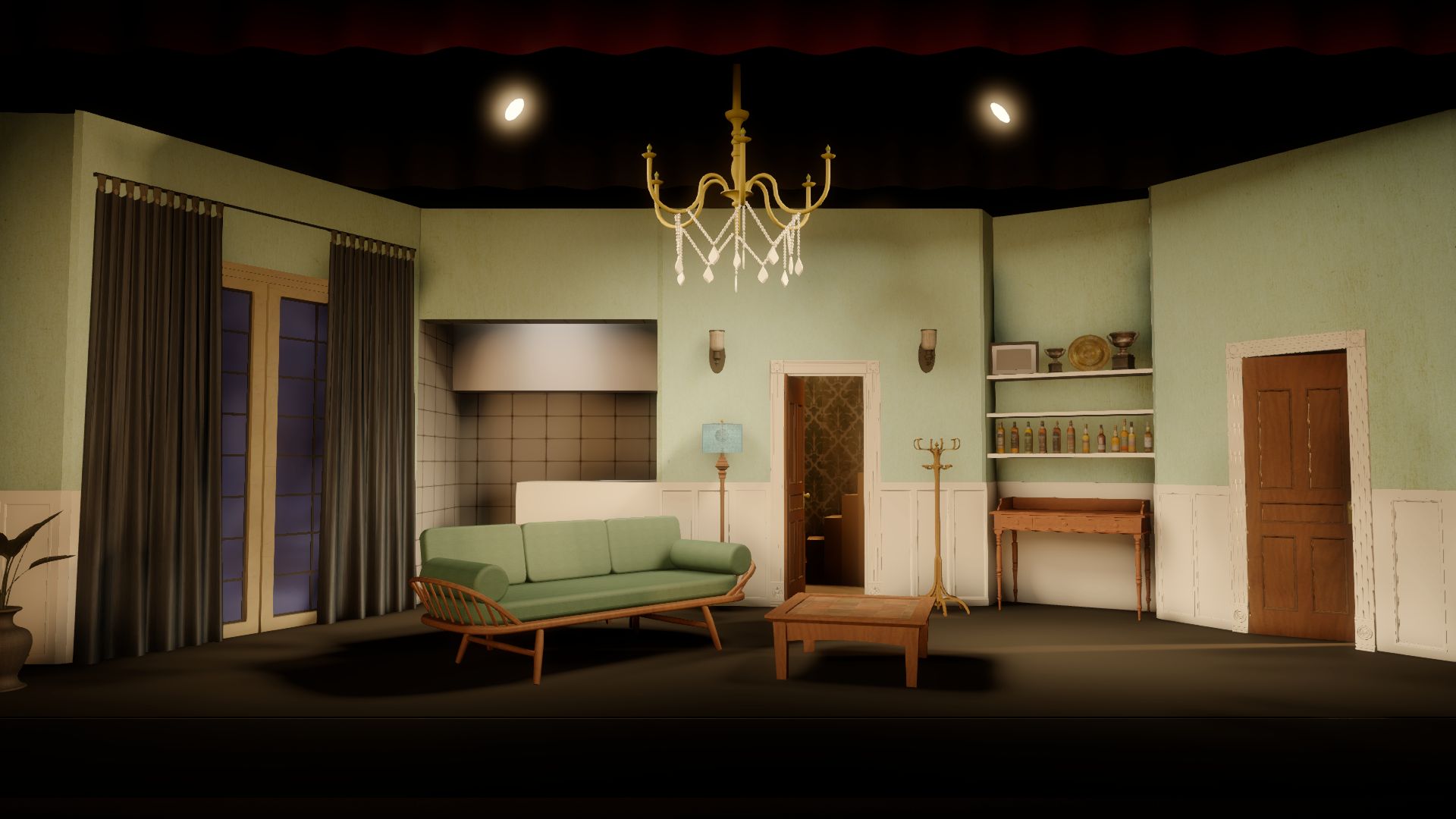
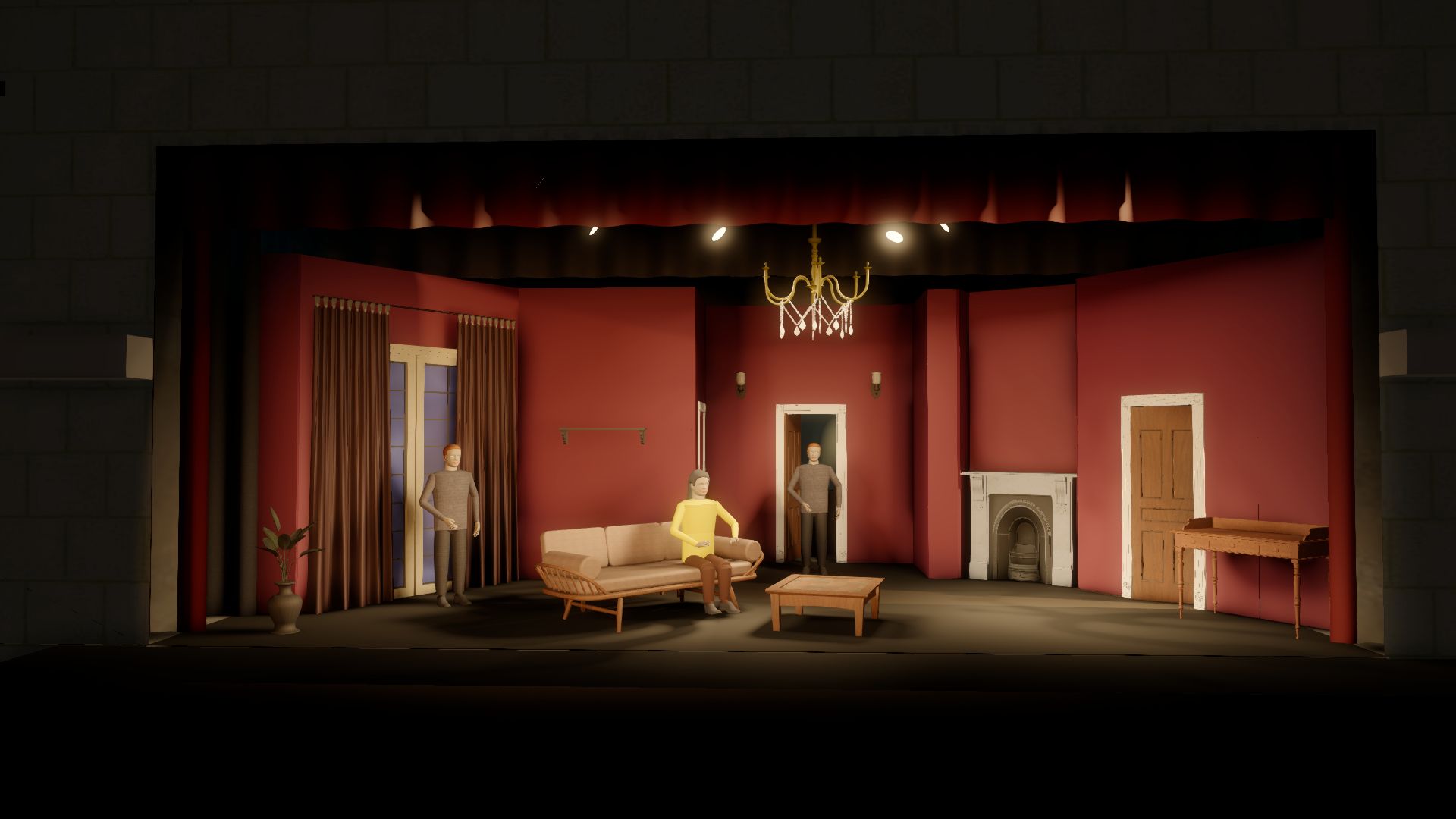
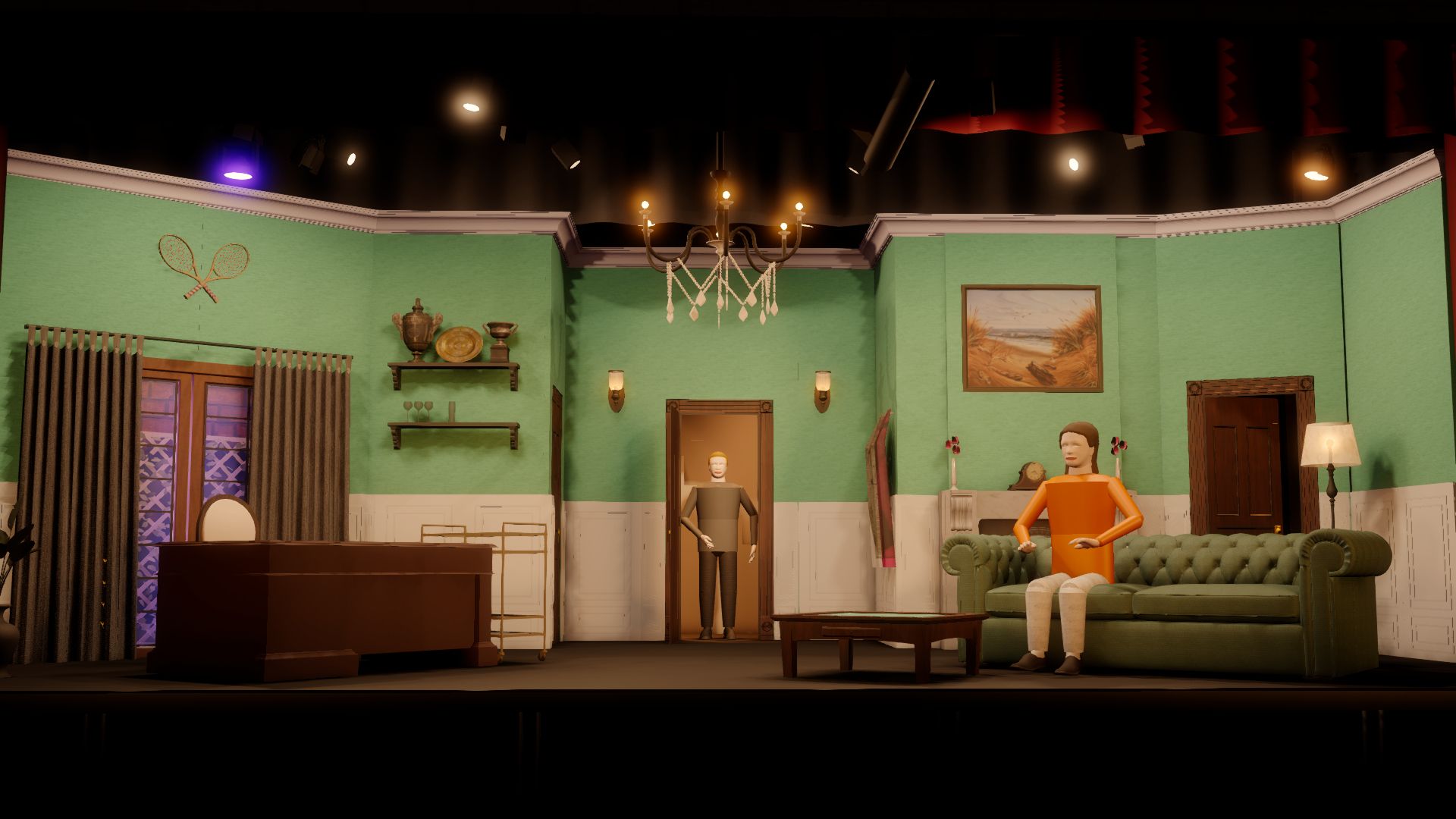
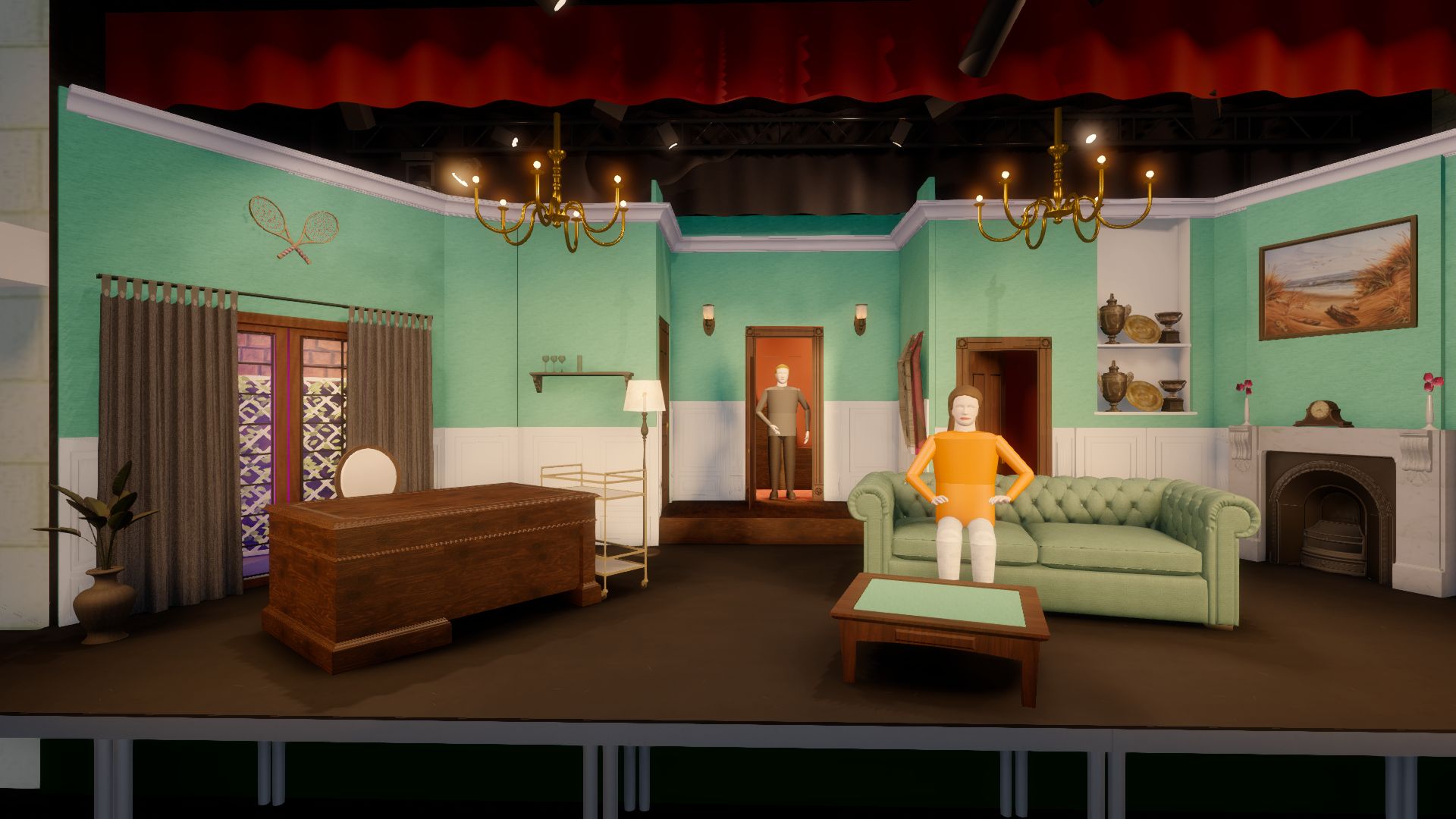
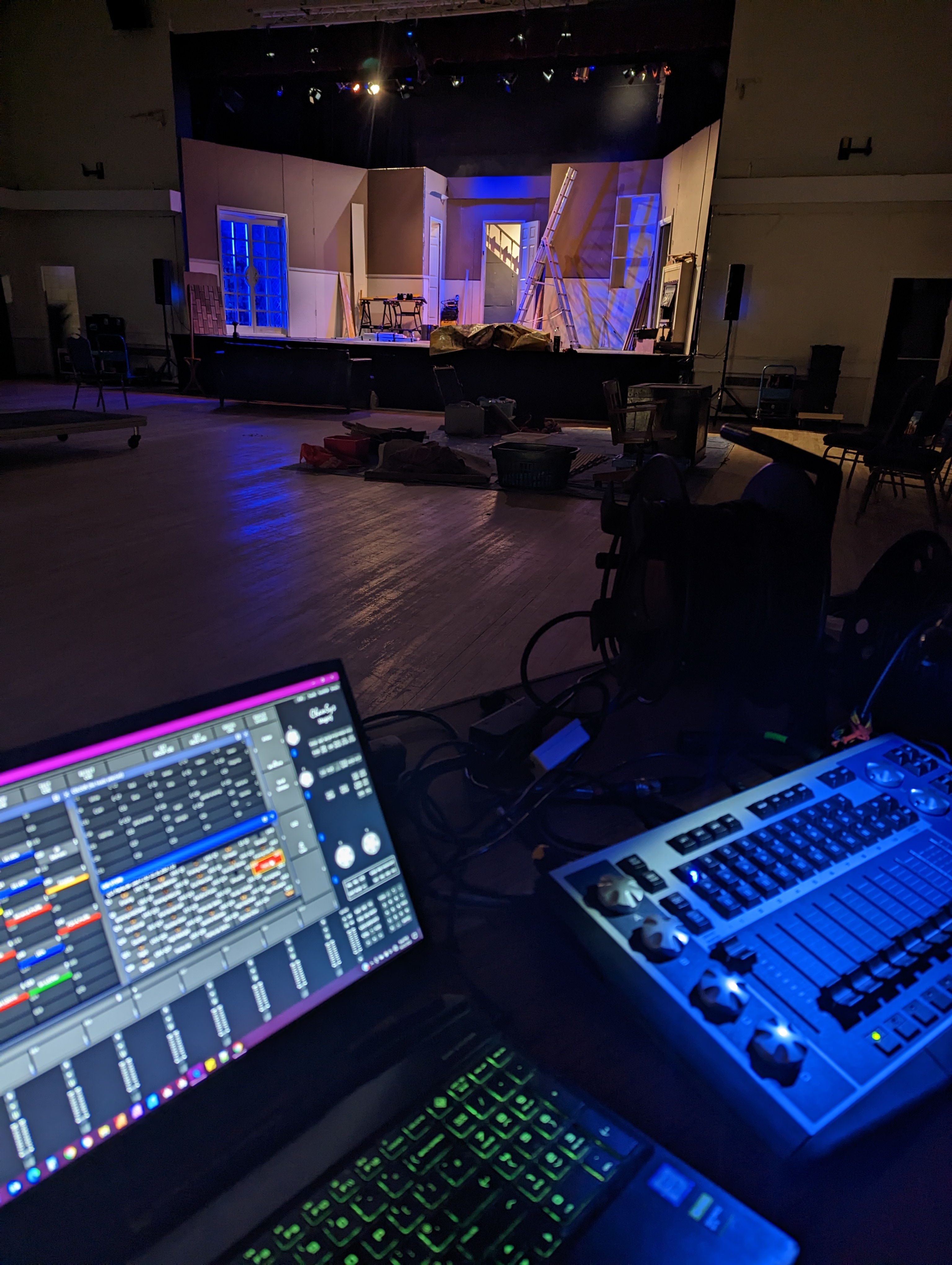
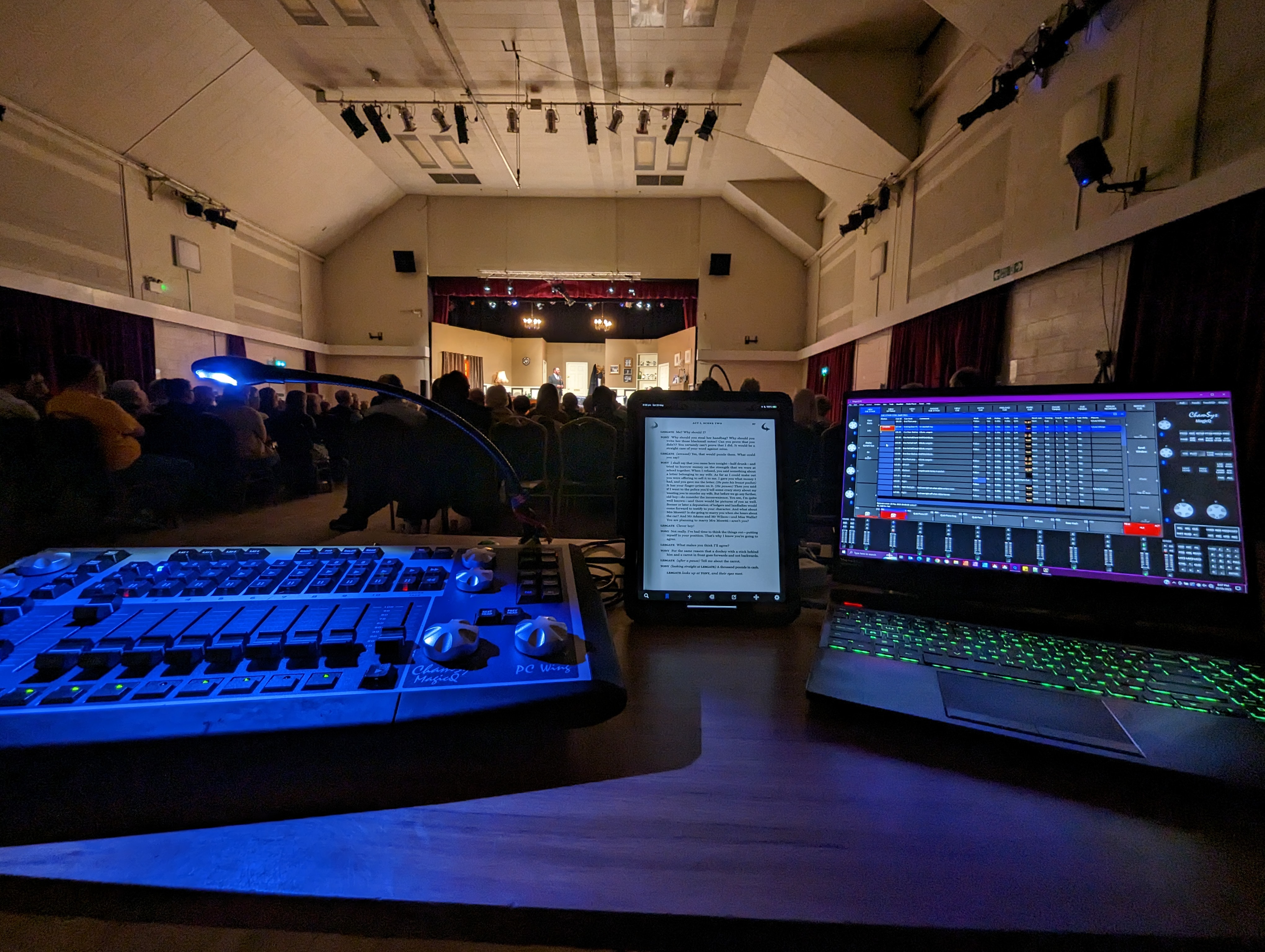
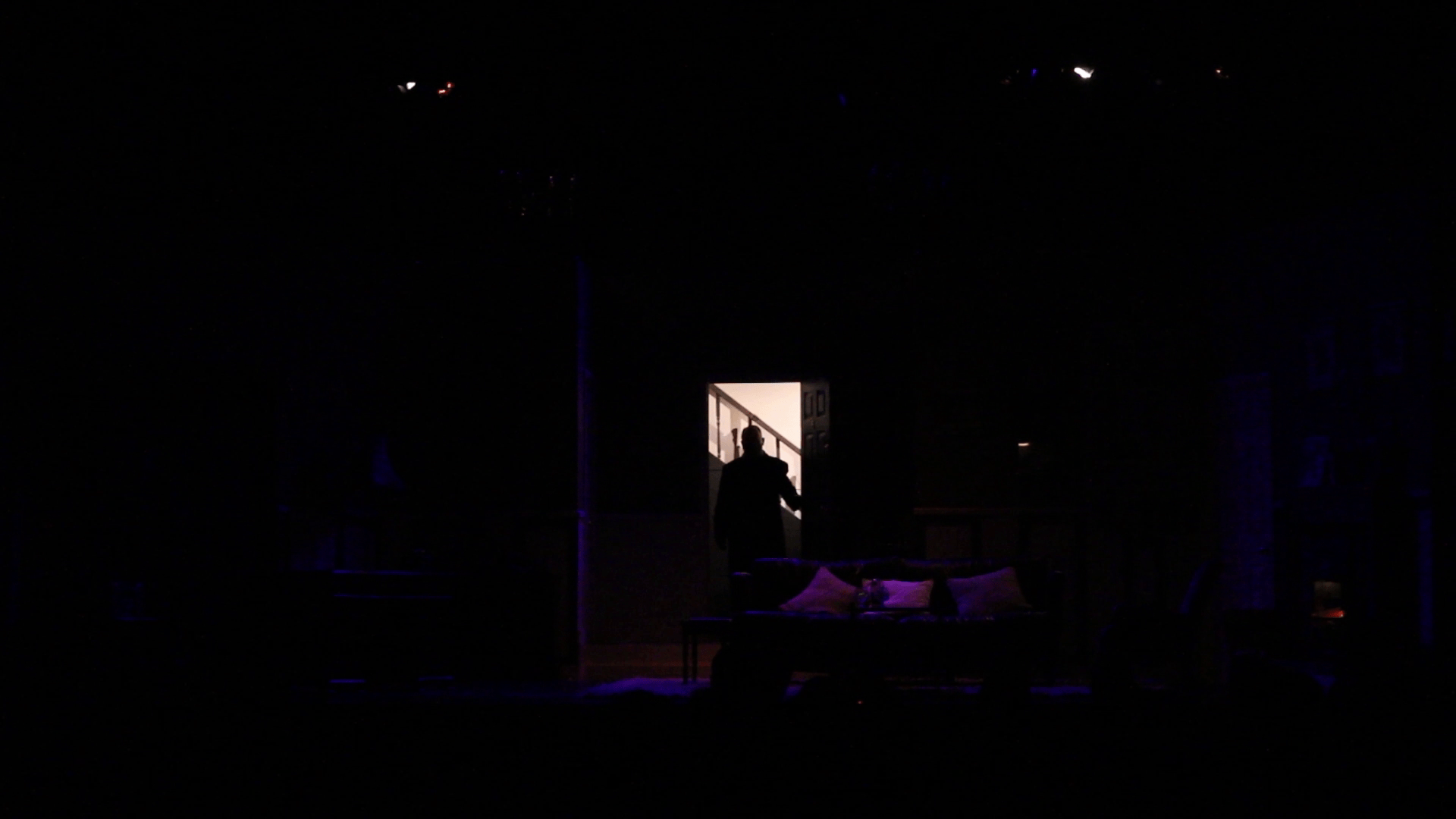
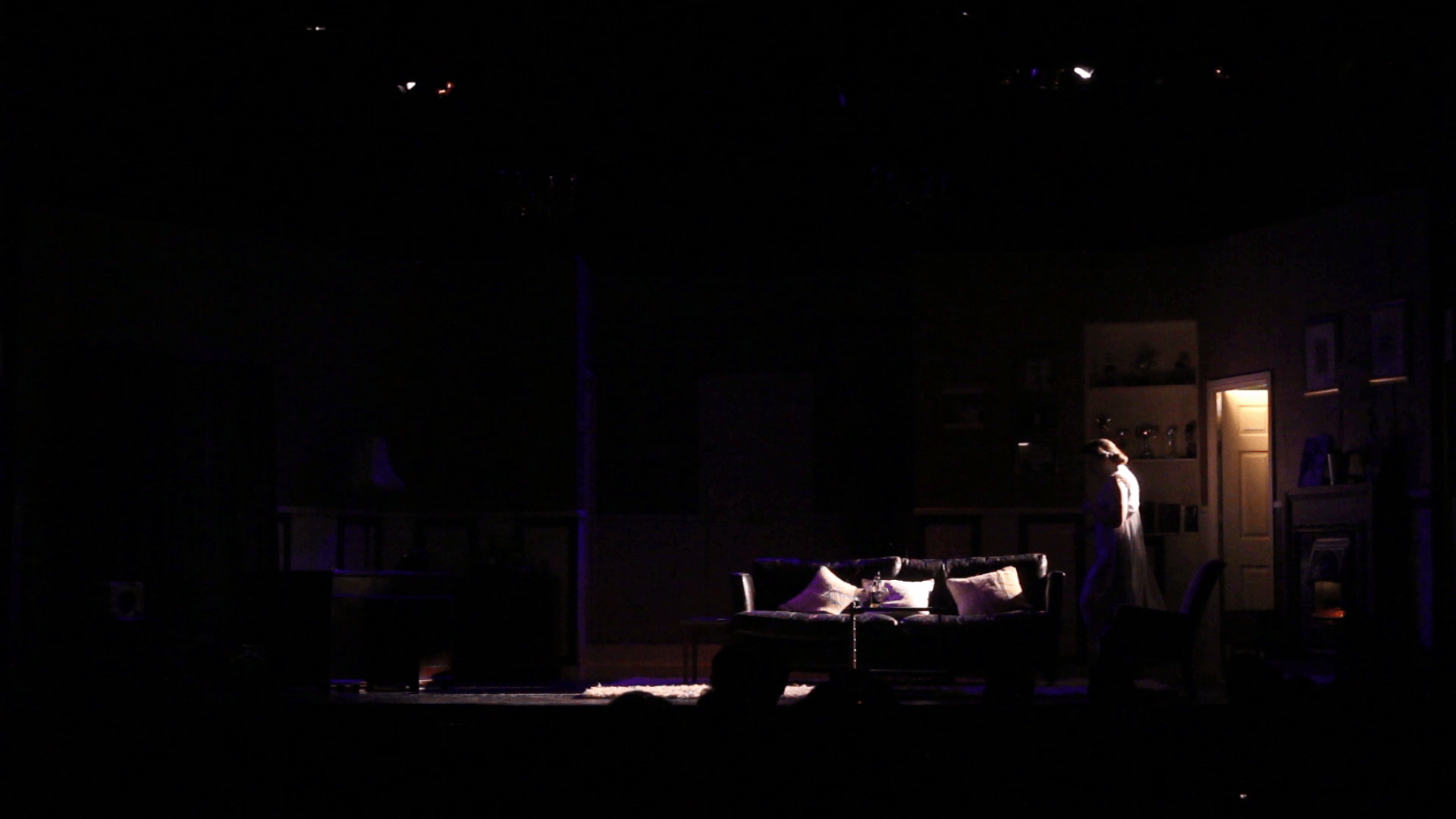
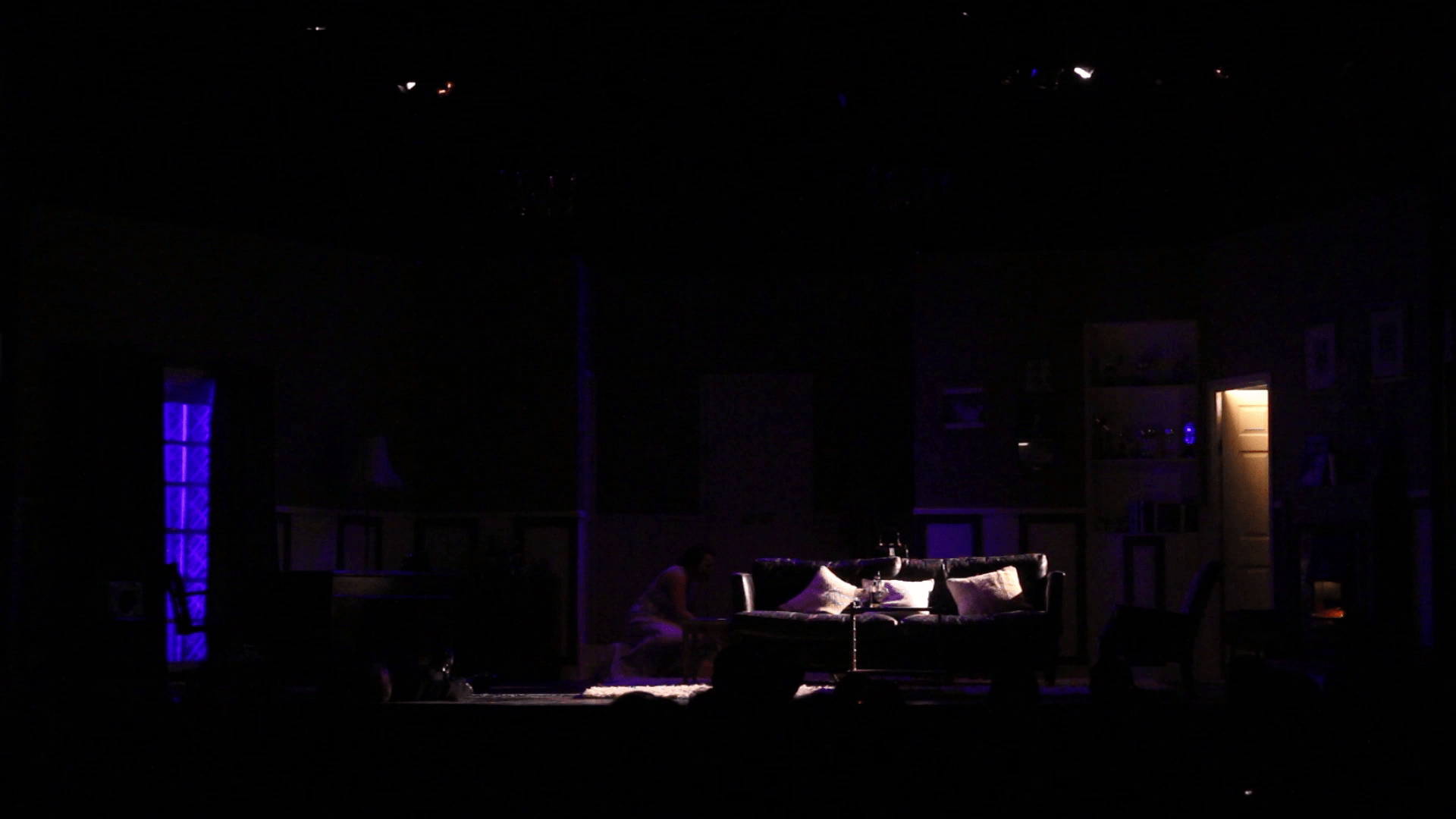
The set design was created within Capture, which allowed me to also create the lighting design at the same time. This was a fairly straight forward play in regards to lighting, with only 4 basic states: early evening, evening, night & daytime. There were many light changes within these states however, to account for the floor lamp and chandelier being turned on or off. The chandelier itself was controlled via a victorian bakerlite and brass lightswitch attached to the set which remotely triggered specific cues within the lighting cue stack, no matter whether the switch itself was on or off. For the sound effects, I had speakers placed in different locations on stage and in the auditorium, this allowed me to send sound effects to different locations, such as the doorbell by the front door, or the radio announcement by the radio. I also had the sound of footsteps starting from the speaker by the door, and gently fading to a speaker upstage left to give the effect of the actors leaving and closing the street door. The sound effects and tracks in QLab were triggered over OSC from my Chamsys lighting desk. We had a phone ringer to trigger the phone, however it became temperamental during the run and I had to quickly add the doorbell ring to be triggered off a separate playback on my Chamsys Wing via OSC for the remainder of the show, replacing it for the rest of the run with a phone ring identical to the real one so that the sound effect could be used seamlessly if the phone ringer failed – which it did a few times!
There are of course things I would do differently, and as you can see in some photos there are shadows from the chandelier which I would have removed if not for time constraints and working primarily alone. Strictly speaking I was also the stage manager for this production, but after being forced to operate lighting and sound from a FOH position my DSM, Natalie, became stage manager and alongside stagehand Casey, they did a cracking job with the phone ringer triggering, and the small but quick scene changes.